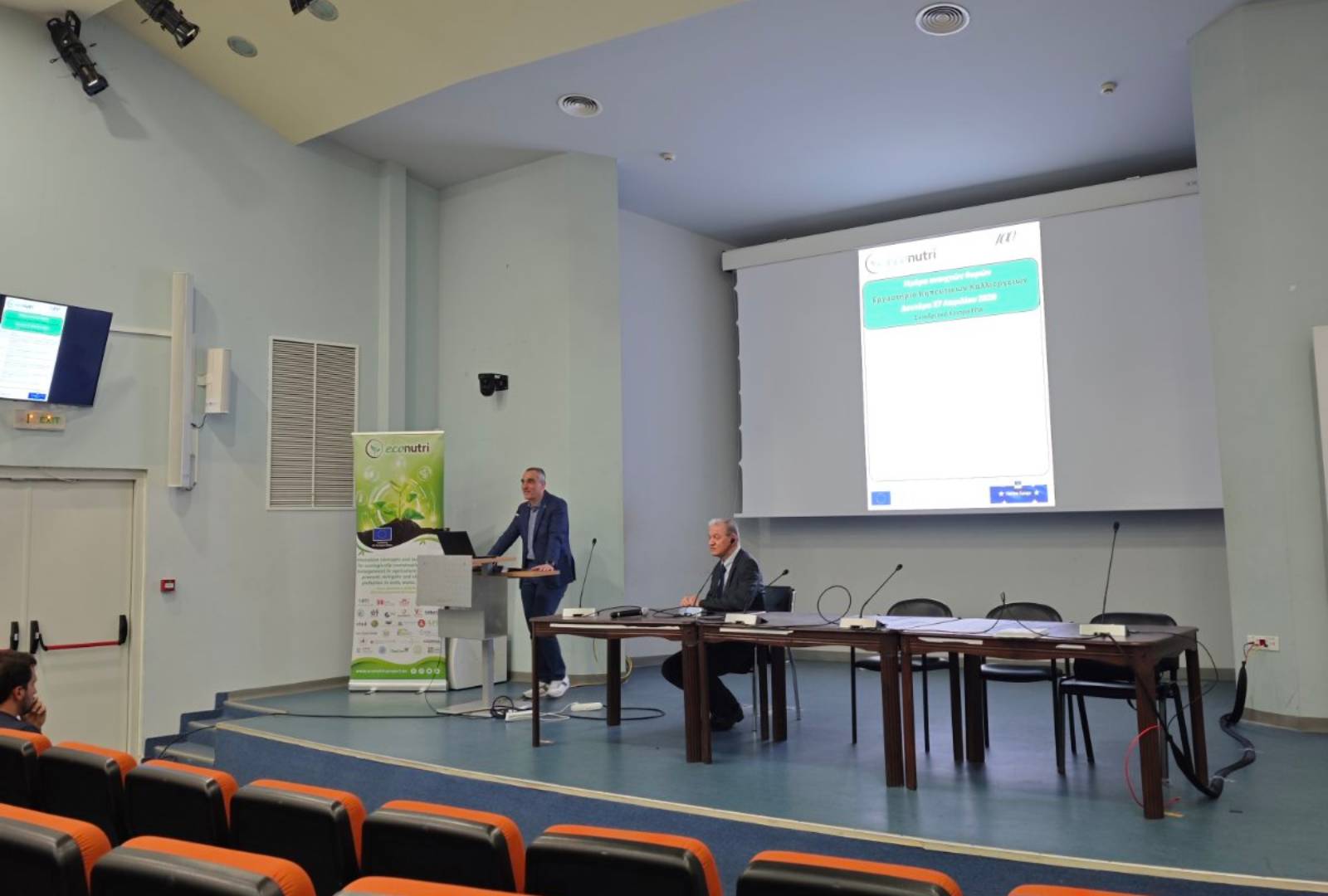

On Thursday, April 3, 2025, a scientific workshop titled “Hydroponic Vegetable Production: Nutritional Value and Environmental Impact” was successfully held at the Conference Amphitheatre of the Agricultural University of Athens. The event was organized by the Laboratory of Vegetable Production and brought together leading academics, researchers, and stakeholders from the agricultural sector.
The workshop opened with welcoming remarks followed by a presentation from Mr. Giorgos Stratakos, Secretary General of the Ministry of Rural Development and Food, who discussed hydroponics and the new support program for greenhouse crops.
Key presentations included:
- Prof. Dimitris Savvas (AUA) on the quality and safety of hydroponically grown vegetables. The potential of closed soilless cropping systems to save fertilisers and minimise nitrate and phosphorus pollution was also highlighted.
- Assoc. Prof. Georgia Datsi (AUA) on the importance of closed hydroponic systems in protecting water resources.
- Prof. Nikos Katsoulas (University of Thessaly) on innovative greenhouse technologies such as cascade cropping and aquaponics. The potential of this system to minimise nutrient emissions through recycling was highlighted.
- Prof. Giorgos Salachas (University of Patras) on hydroponics and aeroponics as sustainable methods for producing high-nutrition crops and reducing environmental impacts from greenhouse crops.
- Prof. Thomas Bartzanas (AUA) on the environmental footprint of hydroponic cultivation assessed through Life Cycle Analysis (LCA).
A roundtable discussion followed, coordinated by Prof. Serkos Haroutounian (AUA), focusing on the future of greenhouse and hydroponic farming in Greece and its potential to save fertilisers and water, reduce nutrient emissions, and control pollution of water resources from nitrates and phosphorus emissions originating from greenhouse crops. Contributions were made by representatives from the production sector (ECONUTRI Stakeholders), highlighting practical perspectives and challenges.
The event concluded with closing remarks and a light lunch for attendees.
The workshop emphasized the potential of hydroponic systems as a sustainable, efficient, and innovative approach to modern vegetable production, addressing both crop nutritional needs and environmental concerns.